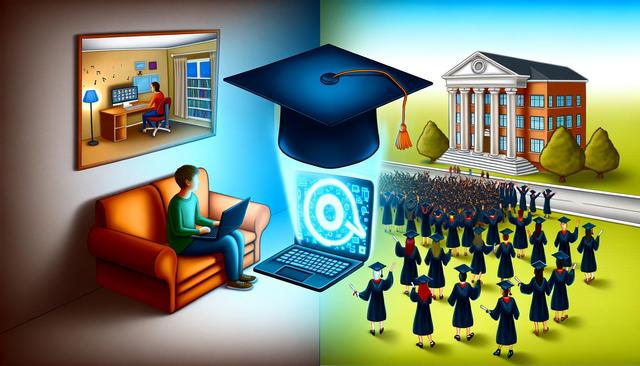
Online degrees vs traditional degrees is an important comparison for prospective students who want to choose a learning format that fits their goals, schedule, budget and preferred way of studying. As the digital era progresses, education evolves to offer more diverse learning formats. The debate between online and traditional degrees is of paramount importance to prospective students looking to make informed decisions. In this comprehensive guide, we compare these two educational paths to provide clarity, backed by data and expert insights.
Both options can lead to a degree program, but they differ in how courses are delivered, how students interact with instructors and peers, and how much flexibility they offer. Understanding these differences can help learners evaluate which format better matches their personal responsibilities, professional obligations and study habits.
Understanding Online Degrees
Online degrees are programs that allow students to complete coursework and earn their qualifications primarily through the internet. This format offers flexibility and accessibility, enabling learners to study from anywhere in the world.
In an online degree program, course materials may include recorded lectures, digital readings, discussion forums, online assignments and virtual meetings. Some lessons are asynchronous, which means students can access them at different times. This can be useful for learners who need to organize study time around work, family or other responsibilities.
Benefits of Online Degrees
Flexibility: Online degrees empower learners to balance their educational goals with personal and professional responsibilities. This flexibility is particularly advantageous for working professionals who need to juggle multiple commitments.
Wide Range of Options: Institutions like Coursera and edX offer courses from renowned universities, expanding access to a diverse array of subjects and specializations.
Cost-Effectiveness: Often, online programs have lower tuition fees compared to traditional on-campus counterparts. Additionally, students save on commuting and housing expenses.
Skill Development: Online learning platforms often emphasize technology use, fostering digital literacy essential in today’s job market.
These benefits are mainly linked to the delivery format. Because the learning takes place online, students often need to manage their own timetable, follow digital instructions carefully and communicate through online tools. This can strengthen organization, autonomy and familiarity with technology.
Drawbacks of Online Degrees
Limited Networking Opportunities: While virtual interactions are facilitated, they might not match the depth and breadth of face-to-face networking found in traditional settings.
Perception Challenges: Some employers may still favor traditional degrees over online ones, though this is gradually changing as reputable institutions expand their online offerings.
Online learning also requires self-discipline. Without a fixed classroom routine, students may need to create their own study schedule, track deadlines and take initiative when they need help. For some learners, this independence is a strength. For others, it can make the program more challenging.
Traditional Degrees Explained
Traditional degrees refer to programs that require physical presence on a college or university campus. These programs are structured around in-person lectures, seminars, and practical labs.
In a traditional degree program, students usually attend classes at scheduled times and interact directly with instructors and classmates. This format can provide a clear routine and frequent face-to-face contact. It may also be especially relevant when a program includes practical labs, campus facilities or in-person collaboration.
Advantages of Traditional Degrees
Structured Environment: Regular class schedules provide a structured framework that some students find beneficial for maintaining discipline and focus.
Rich Campus Experience: Engaging with peers and faculty in person can enhance learning through dynamic discussions and collaborative projects.
Access to Campus Resources: Students benefit from facilities such as libraries, labs, and career services centers.
The campus environment can help students build routines and take part in academic life beyond the classroom. Libraries, labs and career services centers can support research, practical learning and preparation for future professional steps.
Disadvantages of Traditional Degrees
Higher Costs: Traditional programs often come with significant tuition fees in addition to costs related to accommodation and transportation.
Rigid Scheduling: Fixed class schedules might not suit individuals with work or family obligations.
Traditional programs can be less flexible because they are tied to a specific location and timetable. Students may need to relocate, commute or adjust other obligations around the class schedule.
Comparison: Online Degrees vs. Traditional Degrees
The comparison between online degrees vs traditional degrees depends on several practical criteria: learning environment, accreditation, recognition, career opportunities and cost implications. The best way to compare them is to look at how each format affects the daily student experience.
| Comparison point | Online degrees | Traditional degrees |
|---|---|---|
| Learning format | Coursework completed primarily through the internet | Courses attended physically on a college or university campus |
| Schedule | Often more flexible, especially with asynchronous lessons | Usually based on fixed class schedules |
| Interaction | Virtual interactions with instructors and peers | Face-to-face discussions, seminars and collaborative projects |
| Costs | May reduce commuting, housing and relocation expenses | May include tuition, accommodation and transportation costs |
| Resources | Digital platforms and online course materials | Campus resources such as libraries, labs and career services centers |
Learning Environment
- Online: Asynchronous lessons provide flexibility but require self-discipline.
- Traditional: Structured setting with immediate feedback from instructors and peers.
The learning environment influences how students organize their work. Online learning may suit students who can plan independently. Traditional learning may suit students who prefer regular in-person contact and a defined weekly structure.
Accreditation and Recognition
Research shows that as of 2023, a substantial number of online programs are accredited by reputable bodies, enhancing their credibility (U.S. Department of Education). This trend helps bridge gaps in perceived value between online and traditional degrees.
Accreditation means that a program or institution has been reviewed by an external body according to defined standards. For students comparing degree programs, checking accreditation is an important step because it helps confirm that the program has formal recognition.
Career Opportunities
While some employers maintain a preference for traditional degrees, the perspective shift is notable, with many valuing skillset over credentials. Industries such as tech and marketing increasingly recognize the competence of online program graduates.
When comparing career opportunities, students can consider both the credential and the skills developed during the program. Online programs often involve technology use and independent work. Traditional programs often involve in-person collaboration and direct access to campus-based support.
Cost Implications
Online degrees offer savings on expenses like relocation and materials, while traditional settings may justify higher costs with immersive experiences and networking opportunities.
Cost implications can include more than tuition fees. Students may also compare commuting, housing, transportation, study materials and the time required to attend classes. A clear budget can make the comparison between online and traditional education easier to understand.
Case Studies and Data Analysis
The National Center for Education Statistics reports a steady increase in enrollment in online programs, indicating growing acceptance and preference among students.
This information supports the idea that online learning is becoming a more common option for students. It also shows why prospective learners increasingly compare online degrees vs traditional degrees before selecting a program.
How to Choose Between Online and Traditional Degrees
Choosing between the two formats is easier when students connect each option to their own needs. A practical approach is to review learning preferences, schedule constraints, financial considerations and the level of campus access required.
- Consider your schedule: If you need to study around work or family responsibilities, flexibility may be a key factor.
- Review your learning style: If you prefer direct classroom interaction, a traditional degree may feel more natural. If you work well independently, an online degree may be suitable.
- Check accreditation: Accreditation and recognition should be researched before enrolling in any program.
- Compare total costs: Include tuition, housing, transportation, commuting and materials when estimating the financial impact.
- Think about resources: Consider whether you need campus libraries, labs, career services centers or primarily digital learning tools.
Conclusion and Actionable Takeaways
Choosing between an online and traditional degree hinges on personal circumstances, career goals, and learning preferences. For those needing flexibility and tech specialization, online degrees are ideal. Conversely, traditional degrees benefit those seeking structured learning and in-depth campus experiences.
Actionable Insights:
- Evaluate personal learning styles and obligations.
- Research accreditation and industry acceptance of potential programs.
- Consider financial investment versus potential returns in career advancement.
In summary, online degrees vs traditional degrees is not a one-size-fits-all decision. Online learning can provide flexibility, accessibility and digital skill development. Traditional education can provide structure, campus resources and in-person interaction. The most suitable choice depends on the student’s situation and the specific program being considered.
FAQ: Online Degrees vs. Traditional Degrees
Are online degrees the same as traditional degrees?
Online degrees and traditional degrees can both lead to qualifications, but they differ in delivery format. Online degrees are completed primarily through the internet, while traditional degrees require physical presence on a college or university campus.
Are online degree programs accredited?
As of 2023, a substantial number of online programs are accredited by reputable bodies, according to information referenced from the U.S. Department of Education. Students should research accreditation before choosing any program.
Which option is more flexible?
Online degrees are generally more flexible because students can often access coursework through the internet and may benefit from asynchronous lessons. Traditional degrees usually follow fixed class schedules.
Which option costs less?
Online programs often have lower tuition fees compared to traditional on-campus counterparts, and students may save on commuting, housing and relocation expenses. However, total costs depend on the specific program and situation.

