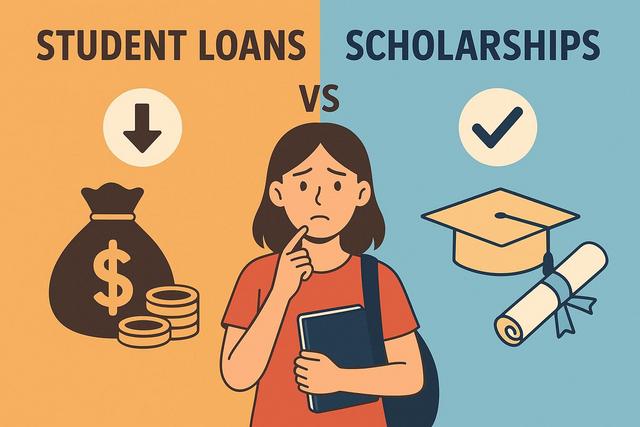
Deciding between student loans and scholarships is crucial for funding your education. This comprehensive guide will help you understand the pros, cons, and strategic considerations of each option.

Best Online Degrees, Certifications & Study Tools
Welcome to EDUCATION 10/09/2026 07:12am
Education is an investment, but it can also be expensive. The good news is that many options exist to help students cover tuition and related costs. From financial aid to scholarships, loans, and grants, the right funding strategy can make higher education accessible without overwhelming debt. On this page, you will discover practical information to identify, apply for, and secure the best funding options available for your situation.
For many families, paying for college or university is a major challenge. Tuition fees, accommodation, and study materials can quickly add up. Financial aid offers a solution by providing partial or full support, depending on your eligibility. Scholarships, grants, and student loans help you focus on learning instead of worrying about money.
Not all aid is the same. Understanding the main categories helps you choose wisely and combine different sources for maximum support.
Scholarships are financial awards based on academic performance, sports, community involvement, or other achievements. Unlike loans, scholarships do not need to be repaid. They can be offered by universities, private organizations, or governments.
Grants are similar to scholarships but often focus on financial need. They help students from low-income backgrounds access higher education. Like scholarships, grants do not require repayment.
Student loans provide funds to cover education costs, but they must be repaid with interest. Government-backed loans often have lower rates and flexible repayment terms compared to private loans. While useful, they should be managed carefully to avoid long-term debt.
Many institutions offer work-study opportunities that allow students to earn money while gaining experience. These programs balance part-time work with academic schedules, helping reduce costs without overwhelming students.
The application process can feel complex, but breaking it into steps makes it manageable:
Because scholarships are competitive, you need to stand out. Here are strategies to increase your chances:
While scholarships and grants should be your first choice, loans may still be necessary. The key is to borrow wisely. Only take the amount you need, understand repayment terms, and explore government-backed options first. Combining grants and scholarships with minimal loans reduces long-term financial stress.
Grants usually focus on financial need, while scholarships often reward merit, skills, or achievements. Both do not require repayment.
Yes, many universities and organizations offer scholarships specifically for international students. Always check eligibility requirements before applying.
In some countries, scholarships covering tuition are tax-free, but those used for living expenses may be taxable. Always verify local tax rules.
Eligibility depends on income, academic performance, nationality, and program requirements. Start by contacting your institution’s financial aid office.
Financial aid and scholarships can make education accessible and affordable. By exploring all funding options, preparing strong applications, and staying organized, you can reduce costs and focus on achieving your academic goals. Education is a long-term investment, and with the right support, it becomes possible for everyone.
Want to read more? Explore all our articles in the financial aid and scholarships category to continue learning about funding your education.
Deciding between student loans and scholarships is crucial for funding your education. This comprehensive guide will help you understand the pros, cons, and strategic considerations of each option.

Navigating the world of scholarships can be daunting, especially when faced with language requirements like IELTS. Fortunately, numerous scholarships exist for international students that do not require IELTS scores. These opportunities open the door to higher education for many who otherwise might find language proficiency exams a barrier. This guide will explore how you can access these scholarships, what alternatives exist, and ways to strengthen your application effectively.

In today's fast-paced world, continuing education is crucial for career advancement. However, balancing work and study can be challenging, especially financially. Fortunately, numerous scholarships are available for adults pursuing online education. This guide provides a comprehensive overview of scholarships designed specifically for working adults, helping them access opportunities to further their careers and knowledge. By exploring these options, working adults can ease their financial burdens while advancing academically.

I’ve been looking at new laptops for 2026, mostly for everyday work and a bit of travel.
If you're comparing options too, here’s a link to the deals I keep an eye on:
See the current offers
I gathered a few learning resources here that might help you move forward at your own pace. If you’re exploring new options, you can:
Start with the topic that speaks to you today. I update these sections as I find new ideas or tools worth sharing.

I keep a Prime subscription because it saves me time on a few everyday things. Nothing fancy — quick delivery and some shows I watch now and then. I’m sharing the link above in case it’s something you’re considering too.