
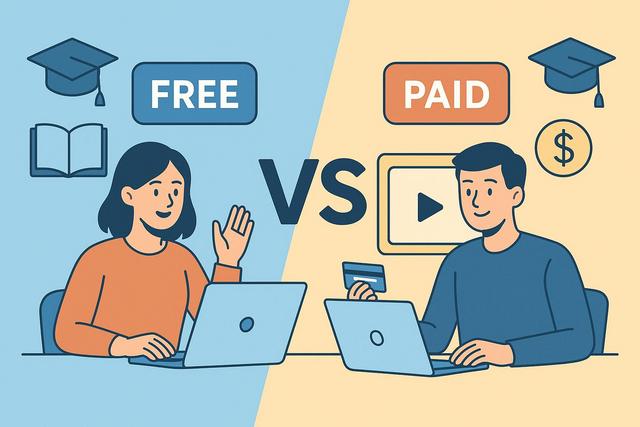
Free vs paid e-learning platforms is a common question for anyone starting online learning. E-learning is a powerful tool for personal and professional growth. With the proliferation of online platforms, learners face a major decision: to choose between free and paid e-learning platforms. Understanding the fundamental differences can guide you to make informed decisions that best serve your educational needs.
In simple terms, an e-learning platform is a website or online service that gives access to courses, lessons, videos, exercises, or learning paths. Some platforms are free to use, while others charge for full access, certificates, structured programs, or additional learning tools. The right choice depends on your goals, your budget, and the type of learning experience you need.
Understanding Free E-Learning Platforms
Free e-learning platforms have democratized education by providing access to knowledge without financial barriers. Websites like Khan Academy and Coursera's free learning materials offer courses that allow learners to gain insights into various subjects with zero cost upfront.
For many learners, free e-learning is a practical starting point. It can help you test a subject before committing money, review basic concepts, or learn at your own pace. This is especially useful when you are exploring a new academic topic, a professional skill, or a personal interest.
Advantages of Free Platforms
- Cost-Effective: Obviously, free courses eliminate the financial burden, making learning accessible to a broader audience.
- Diverse Subject Matter: There is a wide array of topics available for free, ranging from science and technology to humanities.
- Self-Paced Learning: Many free platforms allow learners to start and stop courses according to their schedules.
Self-paced learning means that you can study when you have time, pause lessons, and return later. This format is useful for learners who balance study with work, family, or other commitments.
Limitations of Free Platforms
- Limited Content Depth: Often the depth and rigor of content are less than that found in paid platforms.
- Limited Certifications: Free courses may not always offer credentials recognized by industry employers.
- Ad-Presence and Upselling: Some free platforms use advertising or constantly push users towards their paid services.
A certification is a document or digital credential showing that you completed a course or program. In free courses, access to learning content may be available, but the certificate can sometimes be limited, unavailable, or connected to a paid option. Because policies vary by platform, it is useful to check what is included before starting.
Exploring Paid E-Learning Platforms
Paid e-learning platforms, such as Udemy and LinkedIn Learning, offer extensive features tailored to enhance the learning experience.
Paid courses can be useful when you need a more structured learning path, deeper material, or a course completion certificate. They may also include supplementary materials, exercises, and tools that support a clearer learning sequence.
Benefits of Paid Platforms
- Comprehensive Content: Paid courses typically offer more detailed insights, supplementary materials, and real-world applications.
- Accredited Certifications: These platforms offer certifications upon course completion that can add value to resumes.
- Tailored Learning Paths: Personalized learning experiences and tools cater to specific career, academic, or personal development goals.
- No Advertisements: A clear learning environment without interruptions from ads.
A tailored learning path is a structured sequence of lessons or courses. Instead of choosing each lesson separately, learners follow a guided route connected to a specific goal, such as academic development, personal development, or a career-related skill already identified by the platform.
Downsides of Paid Platforms
- Financial Investment: Courses can be costly, and identifying worthwhile content can be challenging.
- Overwhelming Choices: With vast options available, picking the right course demands careful evaluation.
Because paid courses require a financial decision, it is important to compare what is included. Look at the course outline, the type of certificate offered, available support, and whether free previews or trial periods are available.
Free vs Paid E-Learning Platforms at a Glance
| Criteria | Free e-learning platforms | Paid e-learning platforms |
|---|---|---|
| Cost | No upfront cost for available learning materials | Requires payment for courses, subscriptions, or full access |
| Content depth | May be more introductory or limited in depth | Often includes more detailed content and supplementary materials |
| Certifications | May be limited or not always recognized by employers | May include course completion certifications |
| Learning pace | Often self-paced | Can include structured paths and guided learning tools |
| Advertising | Some platforms may include ads or upselling | Often provides a clearer environment without ads |
| Best use | Exploring interests, casual learning, reviewing basics | In-depth study, structured learning, certification goals |
Selecting the Right E-Learning Platform
Selecting the right e-learning platform starts with a simple comparison between your goals and what the platform provides. A course that works well for casual learning may not be enough if you need a certificate. A paid course may not be necessary if you only want to explore a new topic.
Questions to Consider
- What are my learning goals? Understanding your primary objectives helps in selecting the right platform.
- What budget can I allocate? Determine how much you're willing to invest in your education.
- Do I need certification? If credentials are a goal, paid platforms may be more suitable.
You can also consider how much structure you need. Some learners prefer open access to many lessons. Others need a clear course sequence, deadlines, or a certificate at the end. Matching the course format to your study habits can make online learning easier to manage.
Evaluating Content Quality
Consult reviews, ratings, and community feedback. Leverage platforms with authoritative content and robust support networks like edX.
When evaluating content quality, read the course description carefully. Check whether the lessons match your current level, whether the topics listed answer your needs, and whether the course includes practical examples or supplementary materials. Reviews and ratings can help you understand how other learners experienced the course, but they should be considered alongside the course details.
Trial Periods and Free Courses
Many paid platforms offer trial periods or have select free courses available to get a taste of their offerings before committing financially.
A trial period can help you examine the teaching style, platform layout, and learning materials before paying. Free courses can also help you decide whether a subject is worth studying in more depth through a paid option.
Practical Steps Before Choosing a Course
- Write down the main reason you want to learn the subject.
- Check whether you need a certificate or only the knowledge.
- Review the course outline before enrolling.
- Compare the available free learning materials with paid course features.
- Use trial periods or selected free courses when they are available.
- Read reviews, ratings, and community feedback before making a paid commitment.
These steps keep the decision practical. They also reduce the risk of paying for a course that does not match your learning goals, schedule, or expectations.
FAQ: Free vs Paid E-Learning Platforms
Are free e-learning platforms enough to learn a new subject?
Free e-learning platforms can be enough to explore a new subject, review basic knowledge, or learn casually. If you need deeper content, structured learning paths, or a certificate, a paid platform may be more suitable.
What do paid courses usually offer that free courses may not?
Paid courses may offer more comprehensive content, supplementary materials, real-world applications, tailored learning paths, no advertisements, and certifications upon completion.
Should I pay for an online course if I do not need a certificate?
If you do not need a certificate, free courses may be a good starting point. A paid course can still be useful if you want more depth, clearer structure, or additional learning materials.
How can I evaluate an online learning platform before paying?
Check reviews, ratings, community feedback, course outlines, available trial periods, and selected free courses. This helps you understand what the platform offers before making a financial commitment.
Conclusion: Making an Informed Decision
The choice between free and paid e-learning platforms hinges on your specific needs, financial situation, and learning outcomes. Free platforms are perfect for casual learning and exploring new interests, while paid platforms offer in-depth, structured courses with recognizable credentials. Evaluate course reviews, platform credentials, and personal outcomes to choose wisely.
Actionable Takeaways:
- Define your learning objectives clearly.
- Research thoroughly before investing in paid courses.
- Utilize free resources to explore subjects and gauge interest.
- Consider platforms that offer certifications if advancing your career is a primary goal.

