
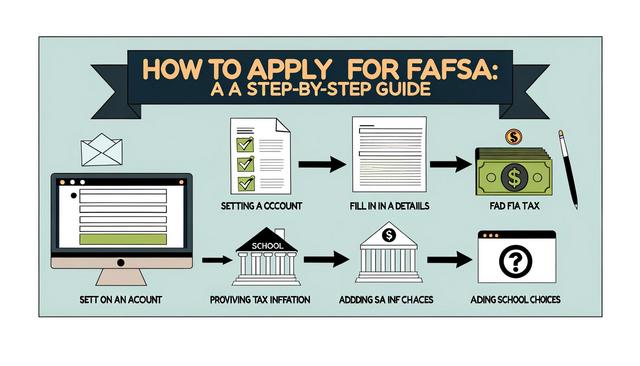
Learning how to apply for FAFSA is a crucial step for students seeking financial assistance for college. The Free Application for Federal Student Aid, commonly known as FAFSA, helps determine eligibility for federal grants, loans, and work-study programs. Understanding the application process can maximize your federal aid eligibility and reduce college expenses significantly.
Understanding FAFSA and Its Importance
The Free Application for Federal Student Aid (FAFSA) is a gateway to accessing millions of dollars in financial aid for college students in the United States. Completing this application is essential to determine eligibility for grants, loans, and work-study funds. According to the Federal Student Aid site, applying early is recommended to maximize available funds, as some aid is distributed on a first-come, first-served basis.
FAFSA is used to collect information about a student’s financial situation. For dependent students, it also collects parent information. Schools use this information to help decide what types of financial aid may be available to the student.
Why FAFSA Matters
- Access to Grants: Grants, such as the Pell Grant, are need-based financial aids that do not require repayment.
- Federal Student Loans: Subsidized and unsubsidized loans have fixed interest rates and flexible repayment options.
- Work-Study Programs: These jobs allow you to earn money for school expenses.
In simple terms, FAFSA is the form that connects students with several types of college financial aid. Because the form is used for grants, federal student loans, and work-study programs, it is important to complete it carefully and on time.
Preparing to Apply for FAFSA
Before starting your application, it’s essential to gather all necessary information to avoid delays.
Preparing in advance can make the FAFSA application easier to complete. It also helps reduce mistakes, especially when entering identification details, school information, and financial records.
Documents Needed
- Social Security Number: Ensure it’s written correctly.
- Federal income tax returns, W-2s, and other records of money earned: You may use the IRS Data Retrieval Tool for accuracy.
- Bank Statements and Current Business Records: Highlight your current financial status.
- FSA ID: This is required to sign the FAFSA form electronically. Both the student and a parent (for dependent students) need FSA IDs, which can be created at the FSA ID portal.
The FSA ID is your electronic login and signature for federal student aid. It helps confirm your identity when you access or submit the FAFSA form online. If parental information is required, the parent should use a separate FSA ID.
Step-by-Step Guide to Completing FAFSA
This step-by-step guide explains how to apply for FAFSA from the first login to final submission. Work through each section in order and review your answers before submitting the form.
Step 1: Log into FAFSA
Visit the FAFSA site and select “Start Here.” Use your FSA ID to access the application. If you need to continue a previously started application, use the “Returning User” option.
Step 2: Select the Right FAFSA Form
Select the appropriate academic year. If attending college starting in Fall 2024, you would apply for the 2024-2025 FAFSA form.
Choosing the correct FAFSA form matters because aid is connected to a specific academic year. Read the year carefully before you continue.
Step 3: Fill in Student Information
Include personal details like your mailing address, and demographic information, and ensure that data matches your high school records.
Check spelling, numbers, and addresses before moving to the next section. Small errors can create delays if the information does not match other records.
Step 4: School Selection
List up to 10 colleges you wish to receive your FAFSA information. Use the school’s federal school code for accurate recording. Assistance is available on the ED’s Federal Student Aid Code website.
School selection allows the colleges you list to receive your FAFSA information. If you are considering several colleges, include the schools you want to review your financial aid information.
Step 5: Determine Dependency Status
Answer questions to determine your dependency status. If deemed dependent, parental information will be required.
Dependency status is used to decide whether parent financial information must be included. Answer these questions based on your current situation.
Step 6: Provide Financial Information
Use the IRS Data Retrieval Tool for accuracy. Filling this section accurately ensures correct aid eligibility calculation.
This section is important because financial information is used to calculate aid eligibility. Use the records gathered before starting the application, including federal income tax returns, W-2s, bank statements, and current business records when needed.
Step 7: Electronically Sign and Submit
After reviewing your application for errors, sign it with your FSA ID, and click submit. You’ll receive a confirmation email.
Before submitting, review each section one more time. Confirm that the selected FAFSA form, school list, student details, dependency questions, and financial information are accurate.
Post-Submission Steps
After submitting, the Student Aid Report (SAR) will be sent out within a few days to verify the information provided.
The Student Aid Report summarizes the information from your FAFSA application. Reviewing it helps you confirm that the submitted details are correct.
Correcting Errors in SAR
Review your Student Aid Report for any discrepancies. Correct errors online via FAFSA, or by contacting the financial aid office of the chosen schools directly.
If you find an error, correct it as soon as possible. You should also monitor communications from the schools listed on your FAFSA, as they may request additional information.
FAFSA Application Summary
| Stage | What to do | Why it matters |
|---|---|---|
| Preparation | Gather your Social Security Number, tax records, W-2s, bank statements, and FSA ID. | Having documents ready helps avoid delays and data entry errors. |
| Application | Log in, choose the right FAFSA form, enter student details, select schools, and provide financial information. | Each section helps determine eligibility for federal student aid. |
| Submission | Review the form, sign electronically with your FSA ID, and submit. | A complete and accurate submission is needed for processing. |
| After submission | Review the Student Aid Report and correct any errors. | The SAR helps verify the information provided on the FAFSA. |
Conclusion: Maximizing Your FAFSA Benefits
Applying for FAFSA is an essential process that can significantly impact your educational affordability. By following this step-by-step guide, preparing the necessary documents, and understanding what to expect post-submission, you set yourself up to maximize your financial aid options effectively.
Actionable Takeaways
- Apply early to increase the chance of receiving aid.
- Double-check all information for accuracy to avoid delays.
- Regularly monitor communications from prospective schools regarding additional requirements.
FAQ About How to Apply for FAFSA
What is FAFSA used for?
FAFSA is used to determine eligibility for federal student aid, including grants, federal student loans, and work-study funds.
What documents do I need to apply for FAFSA?
You may need your Social Security Number, federal income tax returns, W-2s, other records of money earned, bank statements, current business records, and an FSA ID.
Why do I need an FSA ID?
An FSA ID is required to access and electronically sign the FAFSA form. Dependent students and a parent each need their own FSA ID.
What happens after I submit FAFSA?
After submitting, you will receive a Student Aid Report within a few days. Review it carefully and correct any errors online or through the financial aid office of the chosen schools.

