
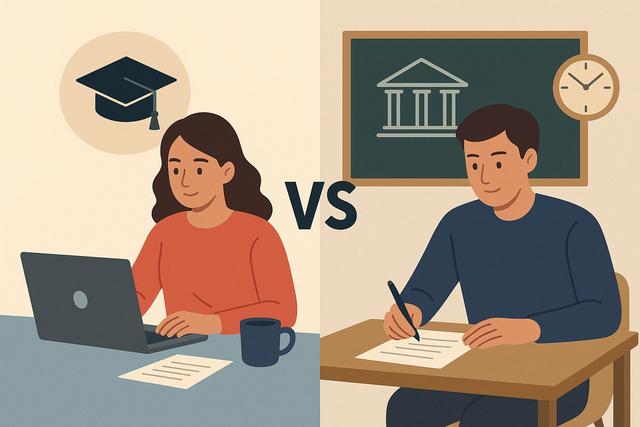
Higher education is a significant investment of both time and resources. As prospective students embark on this journey, they must evaluate whether online degrees or traditional degrees align better with their personal, professional, and academic goals. Each path presents unique advantages and challenges that can greatly influence future success.
Understanding Online Degrees
Online degrees have revolutionized the landscape of higher education, offering flexibility and accessibility that traditional degrees often lack. These programs are designed for students who require a non-traditional approach to learning, such as working professionals or parents.
For example, platforms like Coursera and edX partner with reputable universities to deliver online courses that lead to accredited degrees. The University of Illinois, for instance, offers an online MBA program that is identical in curriculum to its on-campus counterpart.
Advantages
- Flexibility: Students can learn at their own pace and schedule, which is ideal for balancing other life responsibilities.
- Accessibility: Geographical barriers are eliminated, allowing students to enroll in courses from institutions worldwide.
- Cost-Effectiveness: Often more affordable due to reduced commuting and living expenses.
Challenges
- Self-Discipline Required: Success in online learning demands strong time management and self-motivation.
- Limited Networking Opportunities: Face-to-face interaction with peers and faculty is often missing.
- Technology Dependency: Reliable internet and a functioning device are essential, which can be a hurdle for some.
Traditional Degrees: A Tried and True Method
Traditional degrees are synonymous with on-campus experiences that provide a structured learning environment. This method of teaching has been the backbone of education for centuries, fostering community and facilitating direct mentorship from faculty.
Advantages
- Direct Interaction: Students benefit from real-time feedback and collaboration with peers and professors.
- Rich Campus Experience: Participation in extracurricular activities, clubs, and in-person networking events.
- Comprehensive Resources: Access to campus facilities such as libraries, labs, and career centers.
Challenges
- Less Flexibility: Fixed schedules may conflict with other obligations.
- Higher Associated Costs: Includes tuition, accommodation, and commuting expenses.
- Geographical Limitations: Students are bound to institutions within their commute or relocation capabilities.
Cost Comparison: Analyzing Affordability
Affordability is a crucial consideration. It's important to understand the financial implications of both paths:
| Feature | Online Degrees | Traditional Degrees |
|---|---|---|
| Tuition | Variable, often lower | Generally higher |
| Commuting Costs | Low to none | Often significant |
| Living Expenses | Minimal, except if studying abroad virtually | College housing needed |
| Financial Aid and Scholarships | Available | Widely available |
Online degrees typically reduce costs related to commuting and on-campus housing. However, technology purchases and internet fees can add modest costs.
Deciding Factors: Personal Preferences and Career Goals
When comparing online degrees vs traditional degrees, personal circumstances and career goals must be considered. Here are some critical questions to ponder:
- Career Aspirations: Does your field of interest necessitate hands-on training or local industry connections?
- Learning Style: Are you more productive in a classroom setting or autonomous learning environment?
- Availability: How much time can you commit to your educational pursuits weekly?
Strategic Recommendations
- Evaluate Program Accreditation: Ensure both online and traditional programs are accredited by recognized bodies.
- Research Success Rates: Investigate graduation and job placement rates for specific courses or institutions.
- Leverage Hybrid Programs: Consider hybrid programs that offer a blend of online flexibility and in-person experiences.
Common Mistakes and Misconceptions
- Assuming Online is Easier: The digital nature does not equate to reduced rigor or workload; online courses require equal dedication.
- Neglecting Accreditation: Failing to verify program accreditation can result in unrecognized qualifications.
- Ignoring Peers and Networking: Online learners should actively seek community through online forums and local industry events.
Conclusion: Making an Informed Decision
Ultimately, the choice between an online degree and a traditional degree should align with one's lifestyle, professional goals, and financial situation. Online degrees offer unparalleled flexibility and cost savings, while traditional degrees provide immersive experiences and networking opportunities. Selecting the right path involves careful consideration of the advantages and limitations inherent in each option.
Implementation Steps
- Conduct Thorough Research: Gather detailed information about potential programs.
- Evaluate Personal Circumstances: Consider your schedule, learning style, and career aspirations.
- Seek Professional Advice: Consult academic advisors or career counselors to clarify objectives and suitability.
- Prepare Financially: Calculate total costs and explore financial aid or scholarships.
With proper planning and strategic foresight, prospective students can make a decision that will enrich their professional journey.

