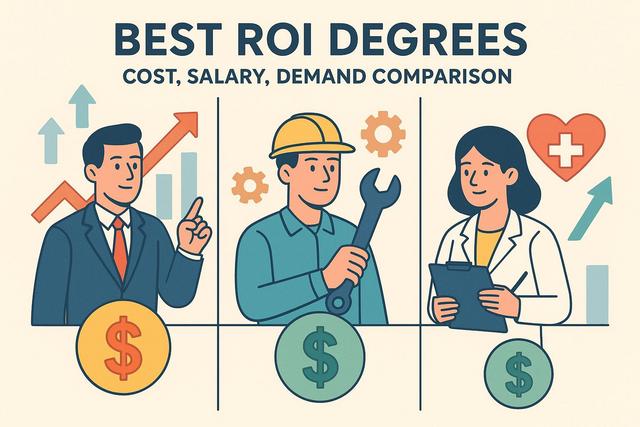
In an increasingly expensive educational landscape, identifying the best ROI degrees is crucial for aspiring professionals. Return on investment, often shortened to ROI, helps compare the cost of a degree with its salary potential and job market demand. By evaluating costs, salary potential, and job market demand, prospective students can make informed decisions that balance financial feasibility and career advancement.
This guide explains how to read degree ROI in a practical way. It looks at tuition, living expenses, loan interest, opportunity costs, earning potential, and demand in the labor market. The goal is not only to identify high-paying degrees, but also to understand how different education paths can affect the time needed to recover the original investment.