
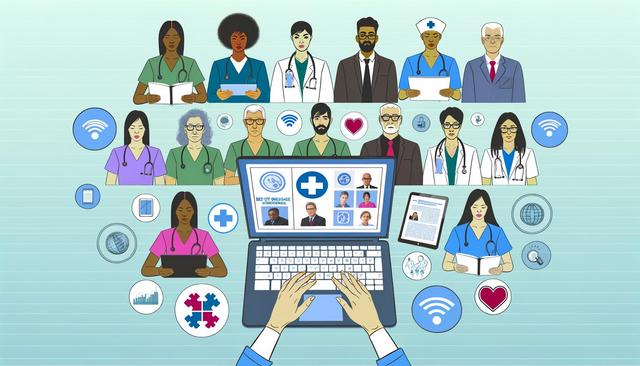
Online degrees for healthcare professionals can help learners strengthen their skills, continue working, and study with more flexibility. In today's competitive job market, healthcare professionals continually seek opportunities to enhance their skills and knowledge while engaging in flexible learning. As we head into 2024, numerous accredited online degree programs offer such advancements tailored to healthcare professionals. Let's explore the best online degrees designed for those passionate about making a significant impact in the medical field.
This guide presents several healthcare degrees, certificates, and specialized programs mentioned for professionals who want to develop their medical career through online education. It also explains the main factors to review before choosing a program, such as accreditation, curriculum, support services, and cost.
Why Choose an Online Degree for Healthcare?
In the digital age, the value of online education has soared. The healthcare sector is no exception, offering numerous advantages to professionals juggling busy schedules. Opting for an online degree allows:
- Flexibility: Easily balance professional responsibilities with academic pursuits.
- Accessibility: Access to world-class resources from renowned institutions globally.
- Affordability: Often, online degrees can be more affordable compared to on-campus programs.
- Career Progression: Obtain credentials that can lead to promotions and specialization.
For many healthcare professionals, flexibility is one of the main reasons to consider online education. A professional may need to manage shifts, patient care responsibilities, family commitments, and study time. Online formats can make it easier to follow courses without relocating or attending a campus every day.
Accessibility is also important. Online programs can provide access to academic resources, digital libraries, recorded lectures, discussion forums, and faculty support. These resources can help learners continue their education while staying connected to their current workplace or community.
Affordability can vary by institution and program. However, online learning may reduce some costs linked to campus-based study, such as commuting or housing. When comparing healthcare degrees, it is still important to review the total cost, fees, and available support before making a decision.
Top Online Degrees for Healthcare Professionals
Several online degrees are designed for healthcare professionals who want to develop advanced knowledge, leadership skills, or specialized expertise. The right option depends on the learner's current qualifications and goals.
Master of Science in Nursing (MSN)
One of the top choices for registered nurses looking to move into advanced practice roles is the Master of Science in Nursing (MSN). With courses in leadership, advanced clinical skills, and healthcare policy, an MSN can pave the way for roles such as a nurse practitioner or nurse educator.
The MSN is a graduate-level nursing degree. In this context, it is especially relevant for registered nurses who already have clinical experience and want to build on their existing nursing background. The courses mentioned in leadership, advanced clinical skills, and healthcare policy show how the degree can combine patient care knowledge with broader decision-making and education topics.
For example, leadership courses can help nurses understand how teams are organized in healthcare settings. Advanced clinical skills can support more specialized practice. Healthcare policy courses can help professionals understand the rules, systems, and decisions that influence care delivery.
Master of Public Health (MPH)
An MPH is ideal for those interested in the broader implications of health, focusing on community health, epidemiology, and health education. This degree opens pathways into government health departments, NGOs, and healthcare policy-making bodies. Learn more about the benefits of an MPH at GWU Online.
The Master of Public Health focuses on health at the population level rather than only at the individual patient level. Community health looks at the needs of groups and communities. Epidemiology is the study of how diseases and health conditions appear, spread, and affect populations. Health education focuses on helping people understand health information and make informed decisions.
Because the MPH includes these broader public health areas, it can be useful for professionals interested in prevention, education, health systems, and policy-related work. The article already mentions pathways into government health departments, NGOs, and healthcare policy-making bodies.
Healthcare Administration (MHA)
The Master's in Healthcare Administration (MHA) prepares graduates for leadership roles in hospitals, healthcare systems, and consulting firms. You'll gain insights into efficient healthcare management and policy implementation.
A Master's in Healthcare Administration focuses on the organization and management of healthcare services. It is different from a clinical degree because it emphasizes administration, systems, leadership, and policy implementation. The MHA can be relevant for professionals who want to understand how hospitals and healthcare systems operate.
Efficient healthcare management may include planning services, coordinating teams, improving administrative processes, and supporting policy implementation. These topics are important in settings where patient care, staffing, budgets, and regulations must be managed carefully.
Certificate and Specialized Programs
Besides degrees, healthcare professionals can explore certifications and specialization programs which enhance specific skills critical in the healthcare sector.
Certificates and specialized programs are usually more focused than full degree programs. They can help professionals build targeted knowledge in a specific area, such as digital health records, data management, or virtual care. They may be useful for learners who already have a healthcare background and want to strengthen a particular skill set.
Healthcare Informatics
The increasing importance of digital health records and data management has led to a surge in demand for healthcare informatics experts. Programs in this niche cover data integration, analysis, and health IT.
Healthcare informatics connects healthcare, information systems, and data. Digital health records are electronic versions of patient information used in care settings. Data management refers to the way information is collected, stored, organized, and used. Health IT means health information technology, which includes digital tools and systems used to support healthcare services.
Programs in healthcare informatics can therefore help professionals understand how health data moves through healthcare systems. Data integration focuses on bringing information together from different sources. Analysis helps professionals interpret data. Health IT supports the use of digital systems in healthcare environments.
Telehealth Certification
With the rise of virtual healthcare delivery systems, telehealth certification programs are pivotal. These certifications prepare professionals to harness technology for patient management effectively.
Telehealth refers to healthcare services supported by communication technologies. In this article, telehealth certification is linked to virtual healthcare delivery systems and patient management. Patient management can include communication, follow-up, coordination, and the use of technology to support care at a distance.
For healthcare professionals, a telehealth certification can clarify how technology is used in patient interactions. It can also help professionals understand the practical requirements of delivering care when the patient and provider are not in the same physical location.
Choosing the Right Program
Selecting the best online degree depends on personal career goals, existing qualifications, and aspirational roles. When choosing a program, consider:
- Accreditation: Ensure the program is recognized by relevant accrediting bodies.
- Curriculum: Aligns with professional goals.
- Support Services: Offers robust career support and networking opportunities.
- Cost: Fits within your budget while offering value for money.
Accreditation means that a program has been reviewed by a relevant accrediting body. For healthcare professionals, this point is important because many healthcare roles require recognized education or credentials. Before enrolling, learners should verify that the program meets the requirements relevant to their goals.
The curriculum is the list of courses, learning outcomes, and topics included in the program. A nurse interested in advanced practice may review MSN courses such as leadership, advanced clinical skills, and healthcare policy. A professional interested in public health may look for community health, epidemiology, and health education. Someone focused on administration may review management and policy implementation content.
Support services can also affect the learning experience. Career support, academic advising, technology support, and networking opportunities can help learners stay organized and connected. Since online education relies on digital tools, clear support services can make the program easier to manage.
Cost should be reviewed carefully. A program may appear affordable at first, but learners should look at tuition, fees, materials, and any other required expenses. The best online degree is not only the one with the lowest cost. It should also match the learner's qualifications, goals, and need for flexibility.
Quick Comparison of Healthcare Online Study Options
| Program type | Main focus mentioned | Examples of related roles or settings mentioned |
|---|---|---|
| Master of Science in Nursing (MSN) | Leadership, advanced clinical skills, healthcare policy | Nurse practitioner, nurse educator |
| Master of Public Health (MPH) | Community health, epidemiology, health education | Government health departments, NGOs, healthcare policy-making bodies |
| Master's in Healthcare Administration (MHA) | Healthcare management, leadership, policy implementation | Hospitals, healthcare systems, consulting firms |
| Healthcare Informatics | Digital health records, data management, data integration, analysis, health IT | Healthcare informatics experts |
| Telehealth Certification | Virtual healthcare delivery systems and patient management | Professionals using technology for patient management |
FAQ
What are online degrees for healthcare professionals?
Online degrees for healthcare professionals are academic programs delivered through online education formats. They can help learners continue their studies while balancing professional responsibilities.
Which online healthcare degrees are mentioned in this article?
The article mentions the Master of Science in Nursing (MSN), Master of Public Health (MPH), and Master's in Healthcare Administration (MHA). It also mentions healthcare informatics and telehealth certification programs.
Why is accreditation important when choosing a healthcare degree?
Accreditation helps confirm that a program is recognized by relevant accrediting bodies. This is especially important in healthcare, where credentials and recognized education can be linked to professional goals.
How do certificates differ from full healthcare degrees?
Certificates and specialized programs usually focus on a specific skill area. In this article, examples include healthcare informatics and telehealth certification, which focus on digital health records, data management, virtual care, and patient management technology.
How should I choose the right online healthcare program?
Review your career goals, existing qualifications, and preferred roles. Then compare accreditation, curriculum, support services, and cost before choosing a program.
Conclusion
Online degrees provide an excellent opportunity for healthcare professionals to advance their careers, adapt to industry changes, and improve healthcare delivery. By choosing accredited and focused online programs, individuals can position themselves strategically within the healthcare sector.
The most suitable program depends on the learner's background and goals. An MSN can support registered nurses who want advanced practice or education roles. An MPH can support interest in community health, epidemiology, and health education. An MHA can support leadership and management interests in healthcare organizations. Specialized programs such as healthcare informatics and telehealth certification can help professionals focus on specific digital and technology-related skills already used in healthcare settings.

