
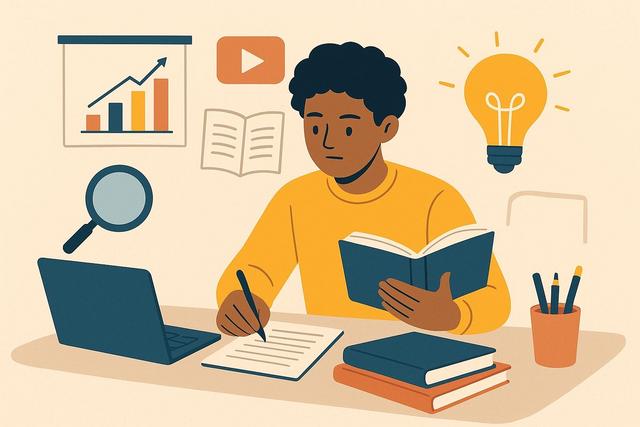
Navigating through college can be challenging, especially with tight budgets. Fortunately, countless free study resources are available today to help students succeed academically without financial strain. This guide unveils the best tools and platforms, offering invaluable insights for thriving in your college journey.
Leveraging Open Educational Resources (OER)
Open Educational Resources (OER) are freely accessible, openly licensed educational materials. They are created for teaching, learning, and research purposes. These resources come in various forms such as textbooks, courses, and online classes.
Examples of OER Platforms
- MIT OpenCourseWare: Offers free lecture notes, exams, and videos from real MIT courses, providing the same learning experience as being in the classroom.
- OpenStax: Provides free, peer-reviewed, openly licensed textbooks, making education more accessible.
The major advantage of OER is their adaptability; students can modify and share resourced based on their needs. Institutions like the University of California are adopting these practices to lower textbook costs.
Online Libraries and Archives
Digital libraries offer extensive collections of books, research papers, and other learning materials at no cost.
Top Free Digital Libraries
- Project Gutenberg: Offers over 60,000 free eBooks, including classic literature and reference books.
- Google Scholar: An efficient tool for scholarly articles; users can access, cite, and download papers for free.
These resources support diverse academic needs, especially valuable for humanities and social sciences where existing literature is pivotal.
Educational Apps and Tools
Mobile technology provides on-the-go educational support, with apps designed to enhance various learning aspects.
Popular Free Educational Apps
- Khan Academy: Offers personalized learning dashboards and practice exercises across numerous subjects.
- Quizlet: Helps create flashcards and quizzes, beneficial for memorizing essential terms and concepts.
Educational apps engage students through interactive platforms, helping maintain focus and motivation.
Massive Open Online Courses (MOOCs)
MOOCs are free online courses available for anyone to enroll. They provide comprehensive coverage of numerous subjects.
Key MOOC Platforms
- Coursera: Some courses are free and designed by top universities. Students can audit courses without charge.
- EdX: Similar to Coursera, it partners with universities to offer free courses.
MOOCs offer flexibility with structured courses, often accompanied by community forums for peer interaction, enhancing the overall learning experience.
Language Learning Platforms
Learning a new language can greatly enhance global career prospects. Several platforms offer free language resources.
Notable Language Platforms
- Duolingo: Offers gamified language learning experience, popular for its usability across multiple languages.
- Busuu: Provides free language lessons, including interaction with native speakers to improve fluency.
These platforms cater not only to language majors but also to students seeking foreign language skills as a supplementary asset.
Mistakes to Avoid
Despite the plethora of resources, students often face common pitfalls:
- Over-relying on a single type of resource can limit exposure to diverse learning methods.
- Ignoring campus-provided resources like academic advisors or tutoring centers which supplement online tools well.
Staying aware of these aspects ensures a balanced approach to utilizing online resources.
FAQ Section
1. Are all online educational resources truly free?
Not all resources are entirely free. Some platforms may offer basic features at no cost but charge for premium content or certificates.
2. How can I verify the credibility of a free online resource?
Check for author qualifications, peer reviews, and cross-reference material with credible academic standards.
3. Can MOOCs replace traditional college courses?
They complement but do not replace formal education; MOOCs offer supplemental knowledge rather than accredited degrees.
Conclusion
The abundance of free study resources provides college students with a unique opportunity to optimize their learning experiences. By leveraging these tools, students can minimize costs while maximizing educational benefits. Implement these suggestions, diversify your learning approach, and make the most of your college education.

