
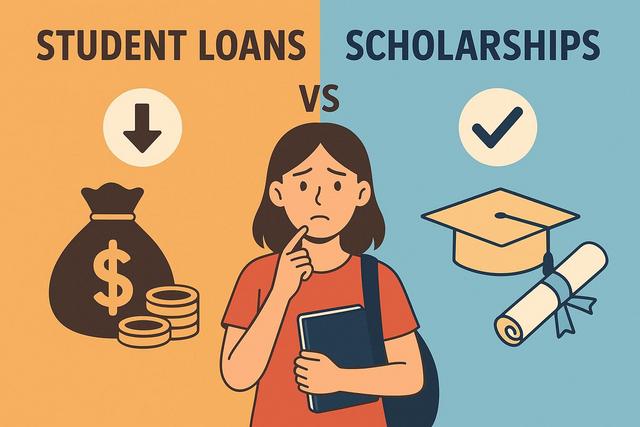
Deciding between student loans and scholarships is crucial for funding your education. This comprehensive guide will help you understand the pros, cons, and strategic considerations of each option.
Understanding Financial Aid: Student Loans and Scholarships
When it comes to financing higher education, understanding your options is essential. Student loans and scholarships represent two primary avenues for financial aid. Both have distinct characteristics and implications for your academic and financial future.
Student Loans Explained
Student loans are borrowed funds from government or private sources to cover education costs. Unlike scholarships, these must be repaid with interest post-graduation. The appeal of student loans lies in their accessibility; almost anyone can apply and receive these funds provided they meet certain criteria. However, the burden of repayment and interest accumulation is a significant consideration.
Scholarships at a Glance
Scholarships, in contrast, are financial awards given to students based on merit, financial need, or other criteria. These do not require repayment, making them an attractive option. They typically require meeting certain eligibility requirements, such as academic excellence or extracurricular involvement.
Eligibility and Application Processes
Applying for Student Loans
The process of applying for student loans often begins with the Free Application for Federal Student Aid (FAFSA). This application assesses financial need and opens doors to federal loans, grants, and work-study opportunities. For private loans, a credit check is usually required.
Actionable Insight: Complete your FAFSA early to maximize your financial aid package. The earlier you apply, the better your chances of receiving favorable terms.
Scholarship Applications
Scholarship applications, on the other hand, can vary widely. Some require essays, interviews, or recommendations. Timing is crucial, as many scholarships have fixed deadlines.
Real-World Example: The Gates Millennium Scholars Program offers significant aid without repayment but requires a rigorous application process. Understanding the requirements and deadlines is key to securing such scholarships.
Cost and Repayment
Cost Implications of Student Loans
Student loans involve varying interest rates. Federal loans generally have lower, fixed rates, while private loans might come with higher, variable rates.
Case Study: A $30,000 student loan at a 6% interest rate will accrue approximately $10,200 in interest over a standard 10-year repayment plan.
Scholarship Impact on Costs
Scholarships directly reduce your out-of-pocket expenses without adding future financial burdens. This means possibly graduating debt-free, allowing for greater financial flexibility early in your career.
Strategic Considerations for Prospective Students
Balancing Loans with Scholarships
It's often strategic to use a combination of scholarships and loans to fund your education. Scholarships can lessen your need for loans, reducing long-term debt.
Practical Recommendation: Prioritize scholarships when planning your financial aid strategy. Consider loans as a supplement for uncovered costs.
Long-Term Financial Impact
The choice between loans and scholarships has enduring consequences on your financial health. Loans imply a future payback period, influencing career and lifestyle choices post-graduation.
Comparison Table:
| Feature                   | Student Loans                  | Scholarships                  |
|---------------------------|--------------------------------|-------------------------------|
| Repayment Required       | Yes                            | No                            |
| Interest                                                      | Yes                           | No                            |
| Application Complexity    | Moderate                       | Varies                        |
| Long-term Financial Impact| High (due to debt)             | None (debt-free)              |
Common Mistakes and Misconceptions
- Misunderstanding Loan Terms: Students often misunderstand loan agreements, leading to unmanageable debt. Clarify terms before commitment.
- Ignoring Deadlines: Missing scholarship deadlines is a common oversight. Stay organized with a comprehensive application calendar.
- Overborrowing: The allure of easy-to-access loan funds can result in borrowing more than necessary. Calculate your actual needs diligently.
FAQs
What is a grace period for student loans?
The grace period is a time post-graduation when repayment is not required, typically ranging from 6 to 9 months.
Can international students apply for scholarships?
Yes, many institutions offer scholarships specifically aimed at international students. Research options early.
How do interest rates affect loan repayments?
Higher interest rates increase the total cost of the loan. Consider loans with fixed, lower rates to minimize repayment amounts.
Conclusion
Choosing between student loans and scholarships is a pivotal decision. Scholarships provide non-repayable financial relief, making them highly desirable. However, when gaps remain, strategically utilizing loans with a well-developed repayment plan can minimize potential financial strain. Start by exploring available scholarships and determine the minimum loan amount necessary to cover outstanding costs. Consult financial advisors to tailor your strategy to your personal circumstances.

